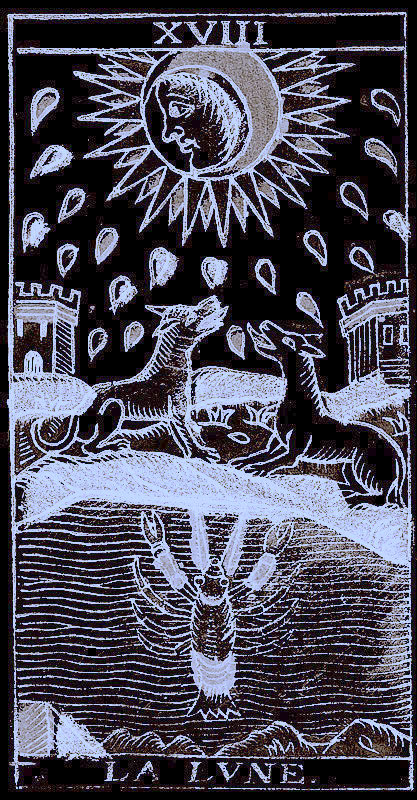
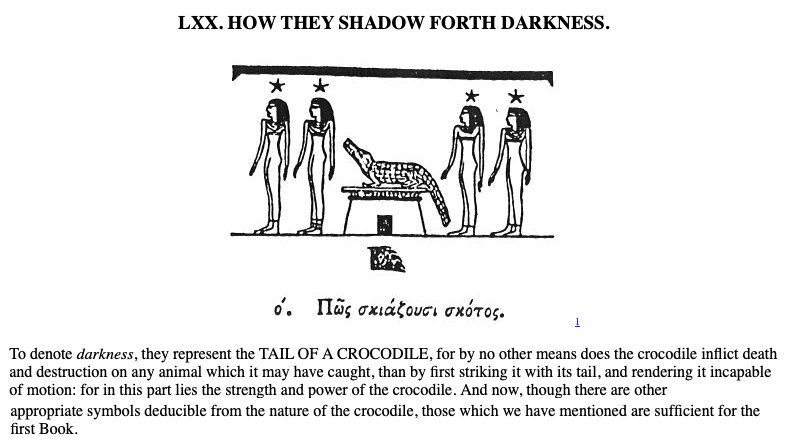
This is an update to a previous posting on the Moon card, but more specifically exploring how it relates to an old French medieval saying, ‘entre chien et loup’ (‘between a dog and a wolf’), which describes the twilight hour between day and night. I had made a comparison of the liminal, canine critters to the crocodile in one of Horapollo’s Hieroglyphics, ‘How they shadow forth darkness’, as well as the beastie Amut, who devours heavy hearts after they are weighed in the Egyptian afterlife.
Horapollo (Horus Apollo), like many who would come after him, made a valiant attempt to decipher hieroglyphs that were thousands of years before his time. What’s interesting is that while many of his descriptions were ‘corrected’ with the discovery of the Rosetta Stone, there are quite a few TdM cards that suggest someone just might have been using Horapollo for inspiration.
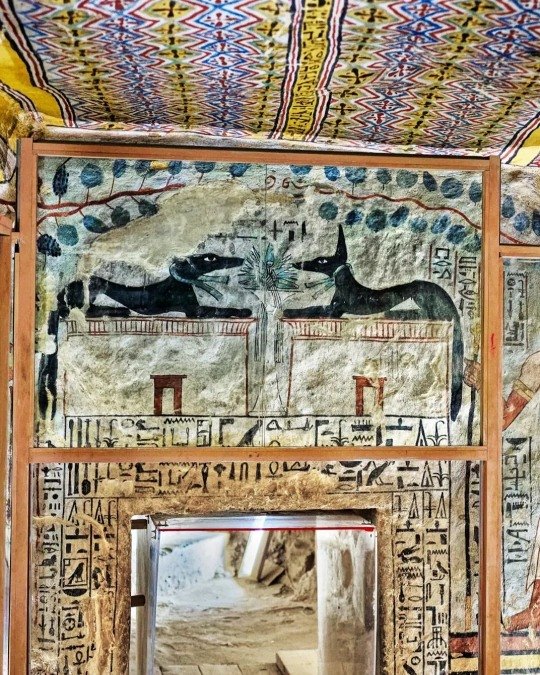
Anyway, I’d admitted the croc and beastie were perhaps a stretch, so here’s an example much closer to the mark. Not sure why it had eluded me before…
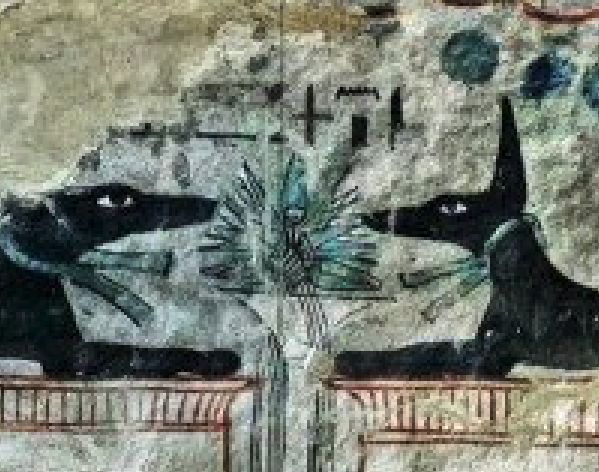
Tomb of Sennefer or Tomb of the Vineyards, in the Valley of the Nobles
All the details are there, the bunches of grapes even look like dew drops of the Moon card! Between the two guardians, there is a long stand with a platter of lotuses on top. Often depicted in tomb paintings, lotuses were considered to have an aphrodisiac sent, which revitalized the dead. A similar metaphor to the crayfish in the TdM card (resembling a scarab or triple Hekate of the liminal spaces), lotuses grow from the muddy waters and into the light of day (or night, as it were).
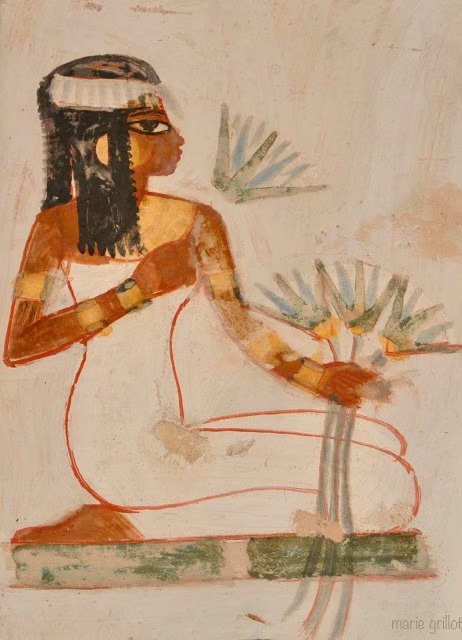
Girl with Lotuses, Theban tomb of Menna
The expression, ‘entre chien et loup’ actually has much older, Latin roots: ‘intra hora vespertina inter canem et lupum’, which is though to date back to at least the 7th century. So it’s not a huge stretch to relate it to Egyptian or Egypto-Greco-Roman tomb imagery. As a metaphor, it is used to describe a time when clarity is fading and things become uncertain, creating a sense of fear or unease. The hound and jackal (Anubis) served as guides through the underworld journey, the in-between state which can also be thought of as the Bardo (Tibetan) or simply the time when lack of light begins to create phantoms that take on a life of their own in our dreams.
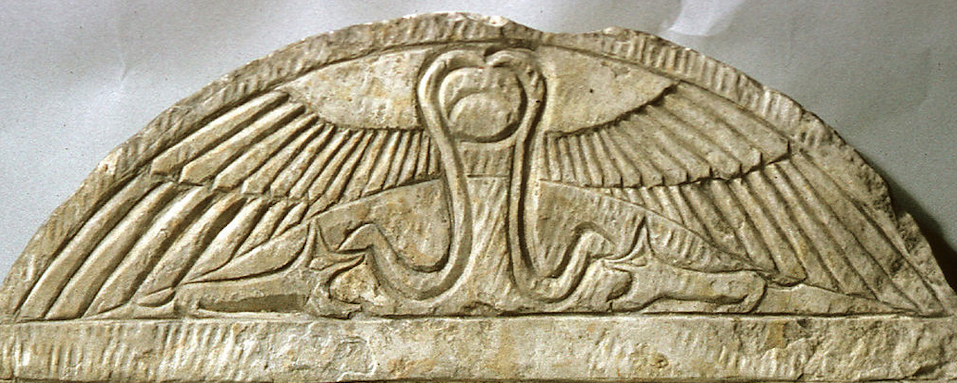
Stela of Pekysis 1st c B.C.–A.D. 4th c (detail)
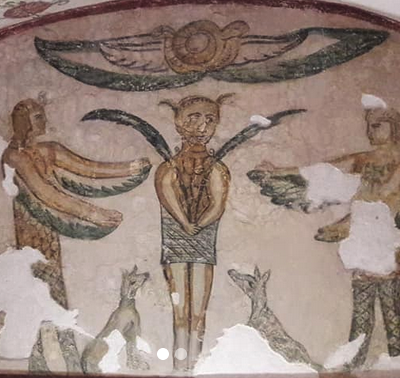
Catacombs of Kom El Shoqafa [Alexandria] ca 2nd c AD (detail)Much later, the Surrealists would find their inspiration at this liminal precipice, drawing from dreams and the unconscious, which were also being explored in modern psychoanalysis. The Surrealist movement was officially founded in 1924. Salvador Dali developed a technique called the ‘paranoiac-critical method‘ which was much like an enhanced dream or nightmare state, possibly not unlike the Bacchic-Orphic mystery, with its essential ritual objects:
‘One of the types of objects theorized in surrealism was the phantom object. According to Salvador Dalí, these objects have a minimum of mechanical meaning, but, when viewed, the mind evokes phantom images which are the result of unconscious acts.’ [Wikipedia]
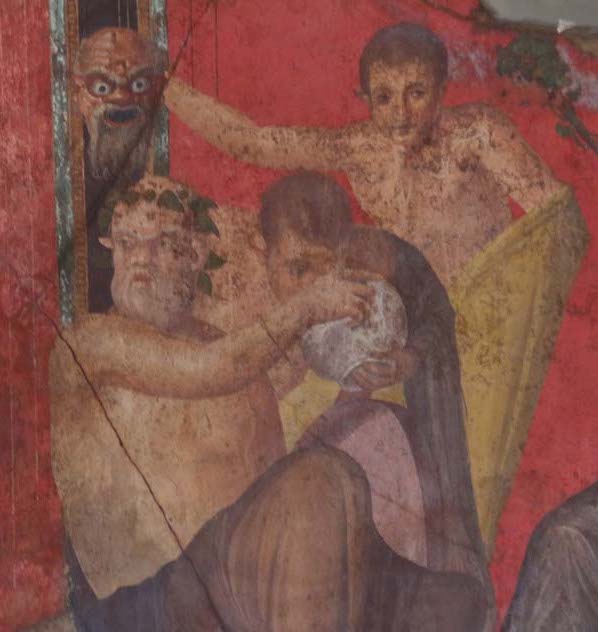
Villa of Mysteries, Pompeii fresco (detail)
Perhaps the original reason for all ritual objects was as a means with which to create phantom ‘guides’ or signposts in the inner or unconscious state. If so, should we be making a conscious effort to be more selective with the objects (and subjects) we ritualize on a daily basis?
Pompeii fresco
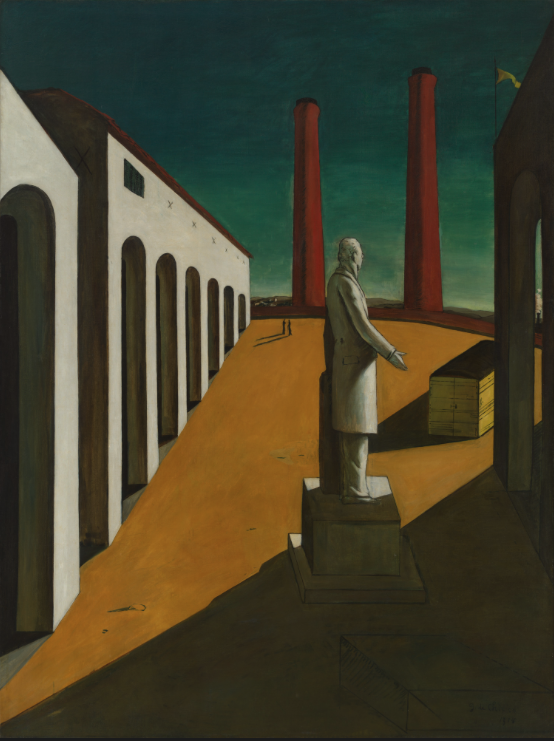
The Moon card has often been compared to a Giorgio de Chirico landscape or Surrealist painting, it’s one of the few cards depicting a landscape with perspective (and is the most pronounced of these). De Chirico was a great inspiration to the Surrealist painters. His often disquieting landscapes feel neither here nor there.
Giorgio de Chirico, ‘The Enigma of a Day’ (Paris, early 1914) MOMA
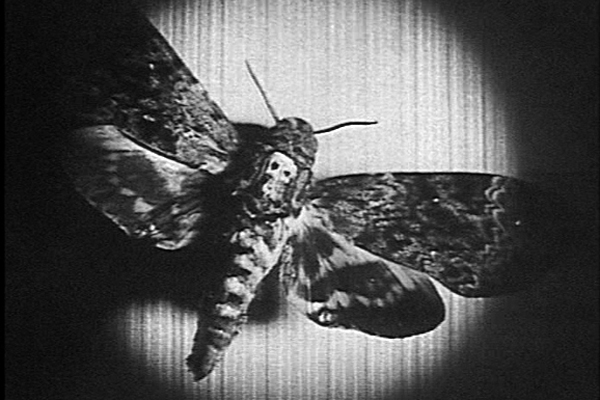
The Surrealists were also exploring the potential of film, which until the late 1920s had been silent. One of the most disquieting scenes in cinema to this day is in the Surrealist film, ‘Un Chien Andalou/L’Âge d’Or‘ (‘An Andalusian Dog/The Golden Age’) by Luis Buñuel and Salvador Dali (1929). The first part of the film’s title is an obvious word play on the old saying. Surrealism came about during the aftermath of WWI, during the ‘twilight’ before WWII…between the hound of Hades and wolf of Mars. Phantoms were everywhere. War itself is a grand surreal (‘super-real’) event that tears the fabric of waking reality.
Death’s-head hawk moth from Un Chien Andalou/L’Âge d’Or
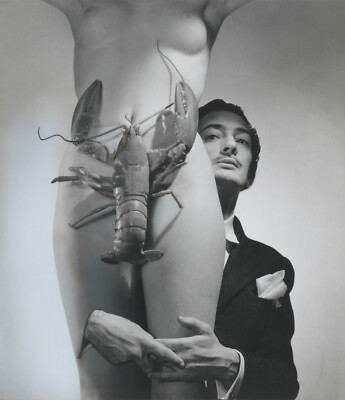
In his own work, Dali often featured lobsters. Being a Taurus he experienced food as erotic, and lobsters in particular as aphrodisiac. In my previous post I had also noted the uterine shape of the crayfish (interchangeable with lobster), but of course it can also be phallic, an all-in-one, so to speak.
The TdM Moon card depicts an in-between state, a possibly perilous time where the soul is either drawn back into a body or up to the heavens. Illusions of the mind and ‘persistent memories’ are everywhere, fears and desires (Dali’s lobster) can become phantoms that direct us. No wonder the Fool takes his spirit animal along! It tears his garment, as if to show us how the fabric of our reality or persona can thus be torn open. Obvious yonic symbolism there, too, foreshadowing rebirth in the World card. Future article! ~rb
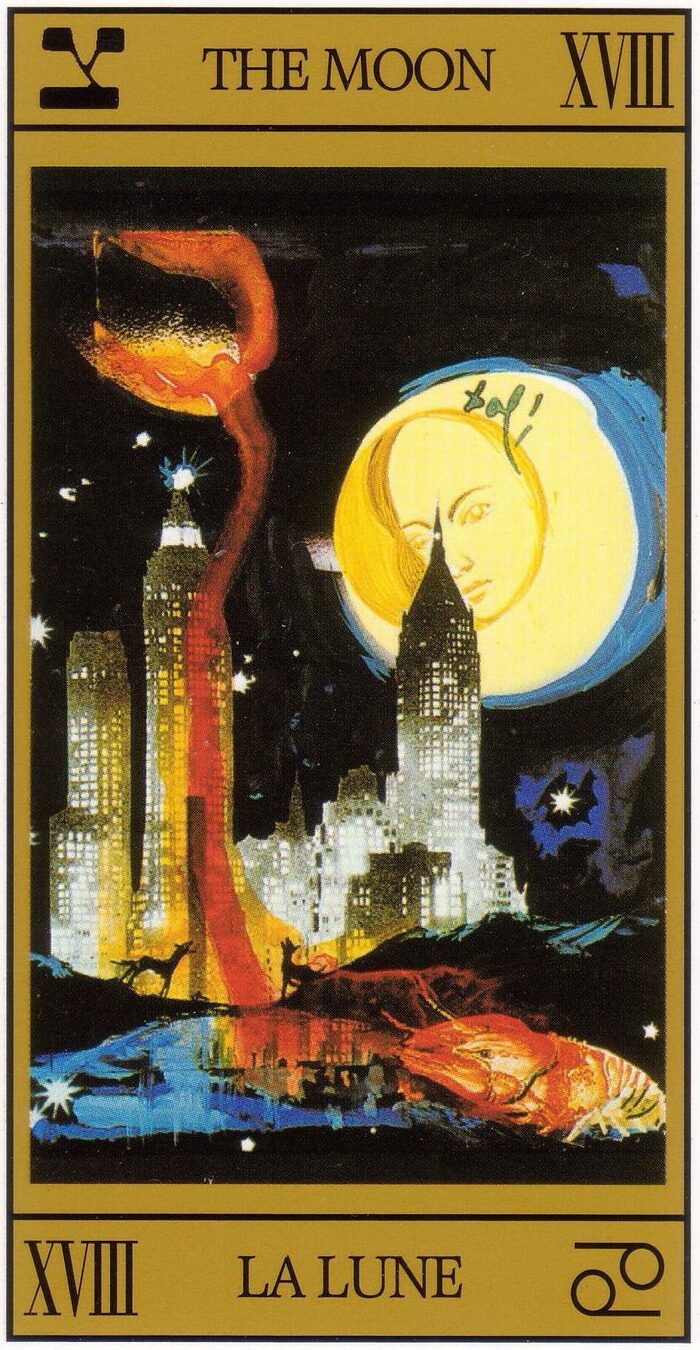
Dali Moon card (featuring old skyline of New York), 1984.
Previously, we looked at the influence of hieroglyphica and emblemata in the Renaissance and its connection to Tarot de Marseille, how TdM’s ‘mytho-alchemical’ imagery is hieroglyphic in nature, playfully imbedded with visual hints of esoteric meaning hidden in plain sight. The cards relate to each other in a variety of ways, too, be it by numeric pattern or other similarities. (Perhaps why they naturally lend themselves to being ‘read’, a different narrative following every shuffle).
Do read my post on Horapollo and the Hieroglyphic Mysteries of TdM , if you haven’t, as an introduction. And as always, click images for details.
Fool and Death (Camoin-Jodorowsky deck)
The Unnamed Card – Death
The Unnamed card (‘Death/La Mort’) is a prime example. Most Tarotists are aware of its relationship with The Fool/Le Mat, and how they strike the very same pose. By design alone, it is immediately apparent that the two figures are related or even one and the same; the first being unnumbered, the second, unnamed. Suddenly it all makes sense, right?
Original Tragicomedy act: the Greek Muses Melpomene (T) and Thalia (C)
Let’s take a closer look at the Unnamed card and its relationship to another major, The Moon, that we might find the visual clues needed for a better understanding of their mystery teachings.
The first consistent features we notice in the TdM skeleton, are its colour-emphasized spine and hip bones, and the skin pulled back around his skull, creating a crescent shape. Also, his spine appears to be made of grain. Typically, it matches the grain in the Emperor’s necklace (which his chicken-basilisk surely must covet!). The Emperor wears the golden seeds of his own, cyclic renewal. 1 + 3 = 4 and in number order, both cards are in the 1/4 place.
grain storage?Skull face (featuring pyramid and new Moon) and Moon face of TdM
It’s obvious, too, that the Reaper’s face is a mirror image of the Moon. Makes sense, the Solar year has 13 moons, the last one being the ‘killing Moon.’ [Clarification: although there are 13 moons within a solar year, there are not 13 full, synodic cycles of the moon in every solar year, but roughly every 2.5 solar years (when we get a ‘blue moon’). 2.5 solar years is one Saturn transit through a zodiac sign.] It’s ultimately why Sun worshippers suffer from triskaidekaphobia. Try as they might, the Greeks could not make 13 – or death – be rational and fit in. They felt the same way about 0, rejecting it outright (ie, no number?). The “inconstant Moon” has long been considered a kind of depository for souls coming and going between incarnations. It is not the light of wakefulness.
Of course Horapollo is talking about the djed bone of Osiris and we can see how the card must be a reference to the Osirian myth. While the djed bone has obvious phallic implications, it is actually symbolic of the grain god’s spine, by which his ‘kundalini energy’ or ‘life force’ climbs:
“The djed was an important part of the ceremony called “raising the djed“, which was a part of the celebrations of the Sed festival, the Egyptian jubilee celebration. The act of raising the djed has been explained as representing Osiris’s triumph over Seth. Ceremonies in Memphis are described where the pharaoh, with the help of the priests, raised a wooden djed column using ropes. The ceremony took place during the period when fields were sown and the year’s agricultural season would begin, corresponding to the month of Koiak, the fourth month of the Season of the Inundation. This ceremony was a part of one of the more popular holidays and celebrations of the time, a larger festival dedicated to Osiris conducted from the 13th to 30th day of the Koiak. Celebrated as it was at that time of the year when the soil and climate were most suitable for agriculture, the festival and its ceremonies can be seen as an appeal to Osiris, who was the God of vegetation, to favor the growth of the seeds sown, paralleling his own resurrection and renewal after his murder by Seth.”[wikipedia]
Seth and his hungry familiar, the Oxyrhynchus
As for his phallus, remember that when Isis collected her dismembered beloved’s pieces to put them back together, she could not find this last bit, which had been eaten by a fish, so the resourceful Goddess had to make a new one, using magic. Might we even see a fishbone shape in the reaper’s frame, its head being the hips and tail being the crescent? Peut-être.
Claude Burrell 1751 (Yves Renaud repro 2015) and a bass
Dismemberment is the beginning of the transformation process. This card alludes to that which Osiris/Osiris-Dionysus presided over, the natural cycles of death and resurrection/rebirth. He was also called ‘god of the living’ and ‘lord of silence’ (ie, no name?). The black soil [of Kemet (‘kmt‘), the ‘black land’ from whence comes ‘alchemy’] pertains to fertility – new growth from rich putrefaction and loam. The Egyptians took their cues from nature, the great alchemist.
“In some rare instances, Osiris was depicted wearing a crown that included a rendering of the moon. This has led some researchers to surmise he was associated with the moon or the night.” [Ancient Egypt Online]
Thoth (Thoth-Hermes), Ibis-headed god of the Moon, who oversees the whole transmutation, might also be at hand…
Ibis beak and scythe
The Moon – Rebirth
Now that we’re experts on the Lunar associations in the Unnamed card…what about the Moon card’s association with Death?
That the crayfish may literally represent the astrological sign of Cancer in TdM is, as the detective novels say, a ‘red herring’. But the association reminds us that in ancient Egypt, Cancer was a scarab – symbol of birth, life, death, resurrection and immortality.
Osiris Canopus with ‘scrab’ (detail) Roman-Egyptian 100-200 AD
Crabs and other sea creatures (and worms) become active, lay eggs, spawn or hatch with lunar cycles/tides, just as we came into the world through our mother’s watery womb at the end of 9 (1+8) lunations. Cancer also rules the breasts and Momma’s milk. Interestingly, in Arab astronomy, the four stars of Cancer were seen as a crib or manger, while in Chinese, as ghosts or spirits of the deceased. [Tip: Stick with stars, planets and constellations, rather than ‘signs’ if/when applying to TdM.]
Cary and Dodal Moon cards – 200 year difference in crayfish design
The Great Mother’s milk is of course the Milky Way, by which the stalwart scarab navigates. Surely this did not escape the Egyptians, whose sky was the Goddess Nut, and readers familiar with Pythagorean and Orphic beliefs will see the significance. Note how the position of the crayfish mimics the upward facing scarab in Egyptian art. Scarab amulets carved with magical hieroglyphs were buried with the dead to protect the heart (seat of the mind) and ensure a safe transition. But the full Moon’s bright light can actually make the scarab’s journey longer and more difficult.
Nutrient-rich dung is my gold: Winged scarab, Greek Period (304-330 BC)
It’s tempting to assume that TdM printers were unfamiliar with the number of legs on a crayfish. But might there be a better explanation for its having only 6?
Greco-Romans and Gnostics, incorporating Egyptian culture/religion also used amuletic, carved scarabs and gems – which, as mentioned previously, were collected and studied during the Italian Renaissance:
“The leading families of Renaissance Italy, the Visconti and the Sforza dukes in Milan, the Estes and Gonzagas in Ferrara and Mantua, or the Medicis in Florence, were certainly willing to pay huge sums of money for authenticated ancient gems: Piero de’ Medici is reported to have remarked that an engraved gemstone was ‘worth more than gold itself.’ They became treasured family heirlooms.” [John Mack, The Art of Small Things]
Like hieroglyphica and coinage, this art form influenced emblemata and likely Tarot as well.
[addendum: the crayfish was used on Greek coins as a symbol for ‘city.’ Marseilles, a port city, was originally founded and colonized by the Greeks.]
Roman carved gems with triplicate Hekate and Moon card crayfishHekate with Anubis (gem and impression), 2nd century
The Moon card, being 18, falls into the ‘3’ position and contains the three dominions of the Goddess Hekate; sky, earth and sea.Hekate (pronounced Hekaté) was portrayed in antiquity as three figures around a central column; forming the Lunar Goddess triad with Selene and Diana, or Underworld Goddess triad with Demeter and Persephone (mysteries). Goddess of crossroads, the saffron-robed, torch-bearing Hekate was invoked to guide souls in the afterlife (some sources say Hermes was her consort) – note the crayfish’s torch-like claws.
Green Conver Moon card and Hecate lamp (Roman, 1st-4th c)Selene with ‘claws’ and torch (Roman, 1st c)
But she had many other roles besides psychopomp, including Goddess of childbirth. Let’s not ignore the crayfish’s uterine shape, either.
The two fortresses in the distance are thought by some to be her temple towers, which is not unreasonable. As well, the Lunar Nodes – ecliptic points where paths of Sun and Moon cross (hence eclipses), connected to reincarnation – have an approximately 18.5 year cycle. Hmm. The visual clue, however, is that these structures are the only elements here, besides the Moon and ‘spirit-dew’, that are above the horizon (the dogs look as if sinking beneath it). There are few cards that make use of depth perspective, so this should alert our attention.
Addendum: Tarot expert Andrea Vitali points out something so hidden in plain sight, even I didn’t spot it (!), which is that the entire lunar cycle is depicted in the card; the two towers representing waxing and waning phases, the middle obviously being the full phase, and the water/crayfish being the dark Moon, when it is not visible. This adds to the idea of Hekate residing here, in the underworld/between world or unconscious realm, so to speak. As mentioned, the claws resemble the guiding torches she bears during this passage.
Pompeii fresco (detail)
The horizon is where the stars rise and set, ie, are born and die. Circumpolar stars never sink beneath the horizon, thus represent the eternal. Two such stars were known to the Egyptians, therefor, as the Indestructibles; Kochab, in Ursa Minor and Mizar, in Ursa Major, which flanked the Pole Star (then Thuban, constellation of Draco). Pharaohs’ pyramids were built in exact alignment with these stars so they could be directly ‘beamed up, Scotty.’
For those without custom-built pyramids, the in-between state might be less streamlined and more perilous. The Moon here appears to occult the Northernmost star, just as she obscures the Milky Way for our scarab. A wandering soul without a visible sky map might find themselves reborn down here, rather than as a god in eternity. I say we invoke the crayfish.
And look, it’s those 4 stars! A bit of a stretch, perhaps…but how curious that the tip of the right dog’s tail in the Conver Moon card is clipped by the border. Accidental or intended clue?
The little croc-headed beastie pasted in the lower right is Ammit, the composite Goddess (I think also part leopard and hippo) who gobbles scale-tipping hearts. Actually, she is more like a composter of the heart-mind:
“Two ways are offered to our soul after death: either a final liberation or a return into incarnation in order to continue the experience of becoming conscious. Many are the texts alluding to reincarnation, either overtly or implicitly through such locutions as ‘renewal of life’ or ‘repetition of births’. The Judgment of the Dead takes place in the ‘Hall of the Double Maât’. This judgment is made in the presence of the dead person’s consciousness, Maât, while the other Maât, cosmic consciousness, presides at the weighing of his heart. Placed on one of the pans of the scale, and weighed against the feather of Maât, the heart expresses the feelings and passions which, if too heavy, risk drawing the soul back again towards earth.” [Lucie Lamie, Egyptian MysteriesNew Light on Ancient Knowledge]
Thus we return to the first lesson, that of the Fool (Le Mat, as if that wasn’t obvious enough) and the Unnamed being as one. An important, first lesson to get us through life, death and all the in-betweens. ~rb