
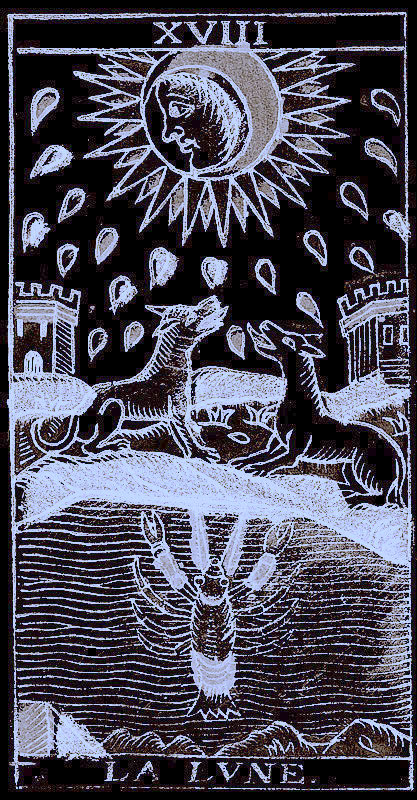
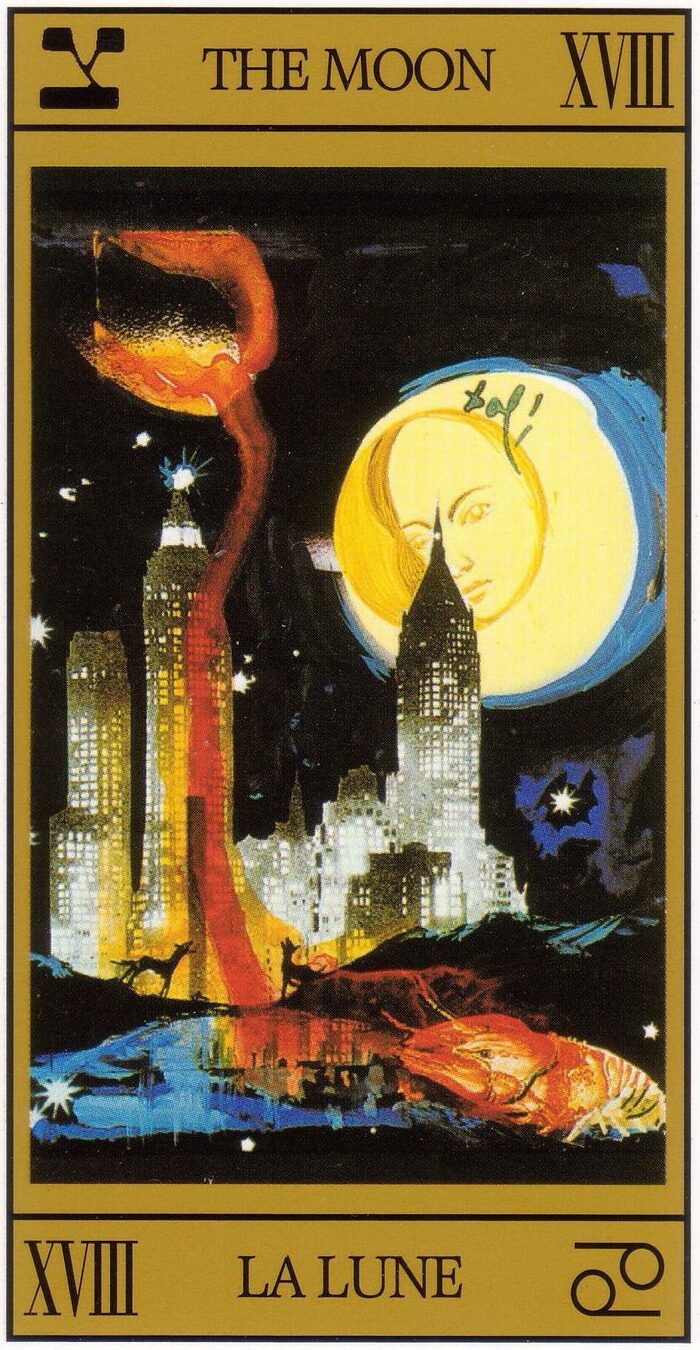
This is an update to a previous posting on the Moon card, but more specifically exploring how it relates to an old French medieval saying, ‘entre chien et loup’ (‘between a dog and a wolf’), which describes the twilight hour between day and night. I had made a comparison of the liminal, canine critters to the crocodile in one of Horapollo’s Hieroglyphics, ‘How they shadow forth darkness’, as well as the beastie Amut, who devours heavy hearts after they are weighed in the Egyptian afterlife.
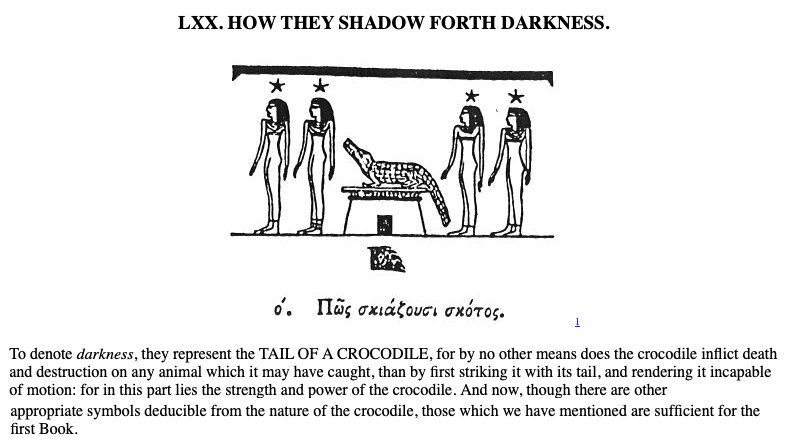
Horapollo (Horus Apollo), like many who would come after him, made a valiant attempt to decipher hieroglyphs that were thousands of years before his time. What’s interesting is that while many of his descriptions were ‘corrected’ with the discovery of the Rosetta Stone, there are quite a few TdM cards that suggest someone just might have been using Horapollo for inspiration.
Anyway, I’d admitted the croc and beastie were perhaps a stretch, so here’s an example much closer to the mark. Not sure why it had eluded me before…
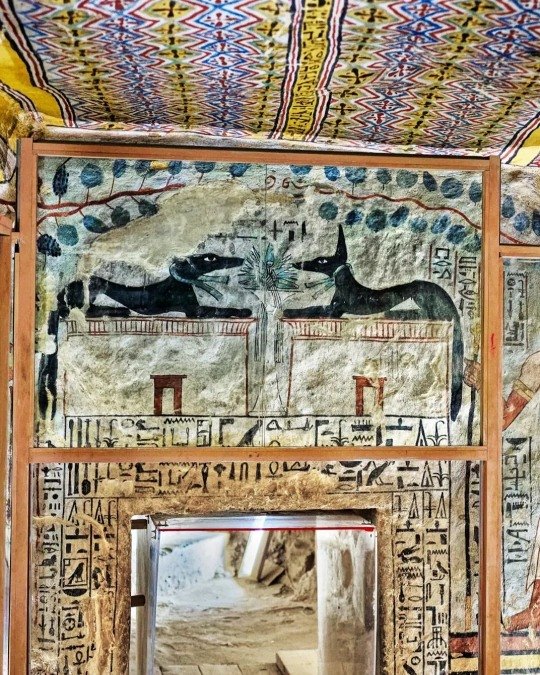
All the details are there, the bunches of grapes even look like dew drops of the Moon card! Between the two guardians, there is a long stand with a platter of lotuses on top. Often depicted in tomb paintings, lotuses were considered to have an aphrodisiac sent, which revitalized the dead. A similar metaphor to the crayfish in the TdM card (resembling a scarab or triple Hekate of the liminal spaces), lotuses grow from the muddy waters and into the light of day (or night, as it were).
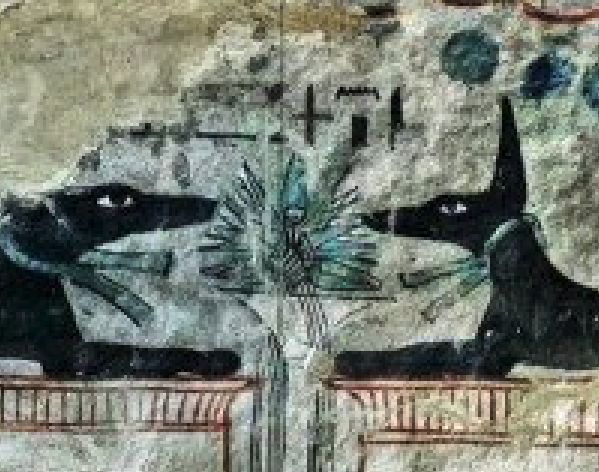
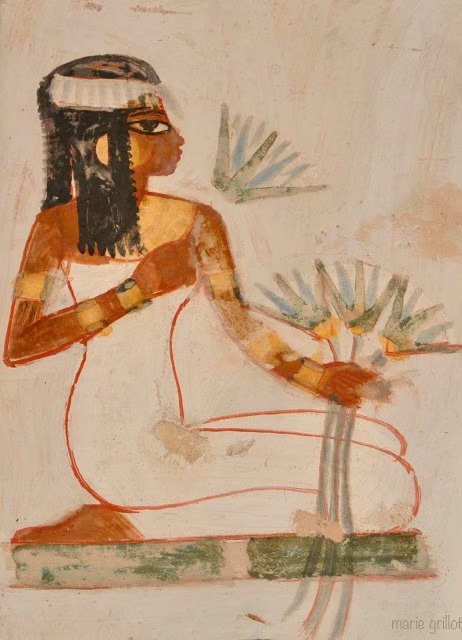
The expression, ‘entre chien et loup’ actually has much older, Latin roots: ‘intra hora vespertina inter canem et lupum’, which is though to date back to at least the 7th century. So it’s not a huge stretch to relate it to Egyptian or Egypto-Greco-Roman tomb imagery. As a metaphor, it is used to describe a time when clarity is fading and things become uncertain, creating a sense of fear or unease. The hound and jackal (Anubis) served as guides through the underworld journey, the in-between state which can also be thought of as the Bardo (Tibetan) or simply the time when lack of light begins to create phantoms that take on a life of their own in our dreams.
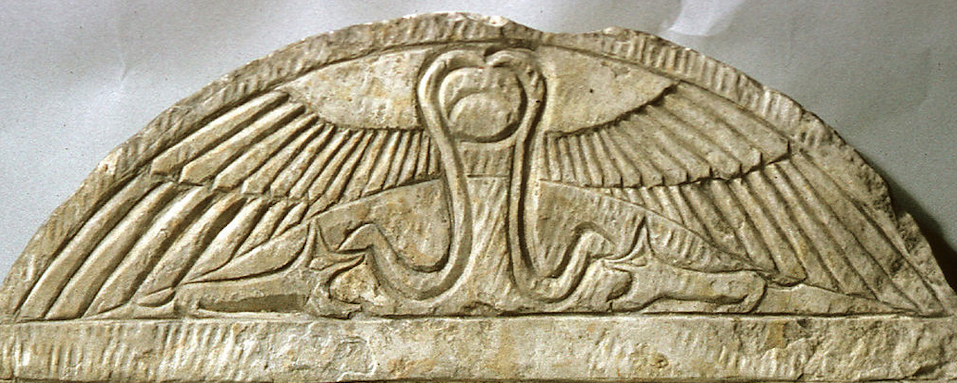
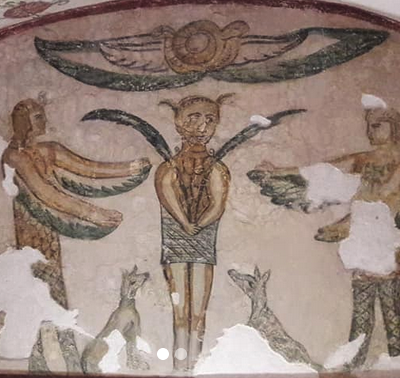
‘One of the types of objects theorized in surrealism was the phantom object. According to Salvador Dalí, these objects have a minimum of mechanical meaning, but, when viewed, the mind evokes phantom images which are the result of unconscious acts.’ [Wikipedia]
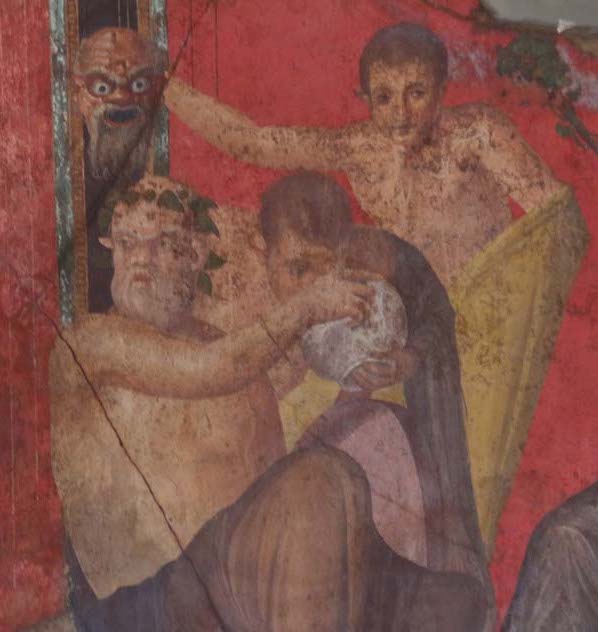
Perhaps the original reason for all ritual objects was as a means with which to create phantom ‘guides’ or signposts in the inner or unconscious state. If so, should we be making a conscious effort to be more selective with the objects (and subjects) we ritualize on a daily basis?

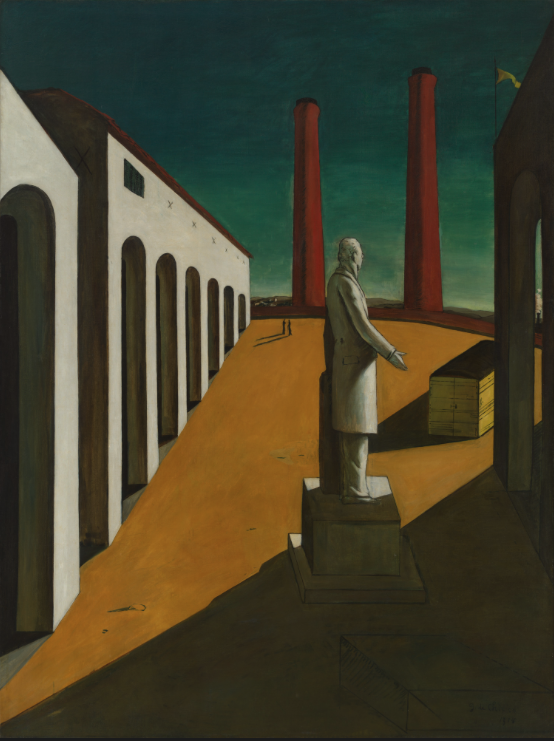
The Moon card has often been compared to a Giorgio de Chirico landscape or Surrealist painting, it’s one of the few cards depicting a landscape with perspective (and is the most pronounced of these). De Chirico was a great inspiration to the Surrealist painters. His often disquieting landscapes feel neither here nor there.
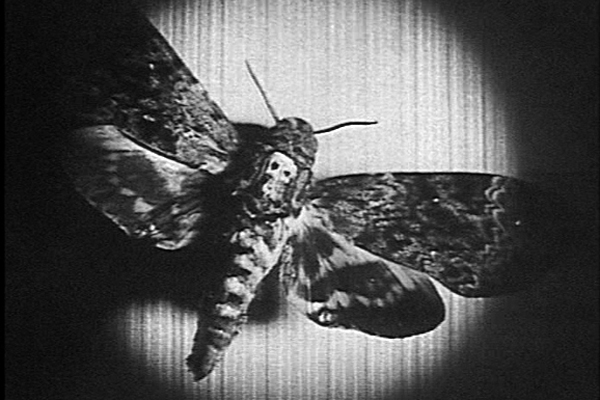
The Surrealists were also exploring the potential of film, which until the late 1920s had been silent. One of the most disquieting scenes in cinema to this day is in the Surrealist film, ‘Un Chien Andalou/L’Âge d’Or‘ (‘An Andalusian Dog/The Golden Age’) by Luis Buñuel and Salvador Dali (1929). The first part of the film’s title is an obvious word play on the old saying. Surrealism came about during the aftermath of WWI, during the ‘twilight’ before WWII…between the hound of Hades and wolf of Mars. Phantoms were everywhere. War itself is a grand surreal (‘super-real’) event that tears the fabric of waking reality.
In his own work, Dali often featured lobsters. Being a Taurus he experienced food as erotic, and lobsters in particular as aphrodisiac. In my previous post I had also noted the uterine shape of the crayfish (interchangeable with lobster), but of course it can also be phallic, an all-in-one, so to speak.
Read about Dali’s cookbook here.
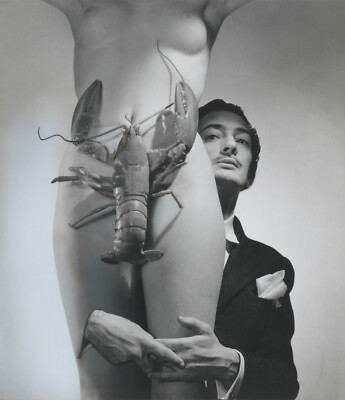
The TdM Moon card depicts an in-between state, a possibly perilous time where the soul is either drawn back into a body or up to the heavens. Illusions of the mind and ‘persistent memories’ are everywhere, fears and desires (Dali’s lobster) can become phantoms that direct us. No wonder the Fool takes his spirit animal along! It tears his garment, as if to show us how the fabric of our reality or persona can thus be torn open. Obvious yonic symbolism there, too, foreshadowing rebirth in the World card. Future article! ~rb
All written content herein is ©copyright ROXANNA BIKADOROFF, except quotations. Do not reprint without getting my permission first. Please share via LINK only (a short pull quote is fine, with credit). Thank you for being respectful.